Bereavement
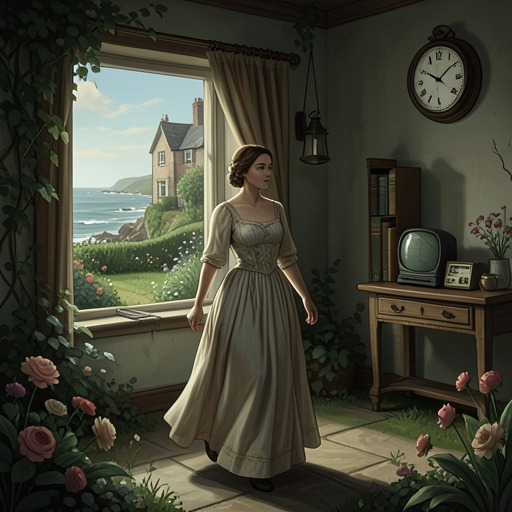
Just DesertsBereavement in the narrative is not a single moment of mourning but a changing condition that moves through shock, silence, care, responsibility, and the reconstruction of a life after loss. It first appears in the aftermath of Lady Radha Pentland’s sudden death, then returns with Sir David Pentland’s terminal illness and death, binding Elizabeth Bennet to the Pentland household through acts of witness and care.## Lady Radha Pentland’s Sudden DeathLady Radha Pentland dies in her sleep after an apoplexy, going to bed one night and never waking. Her death is frighteningly sudden, and the abruptness of it intensifies the grief of those left behind: there is no prolonged farewell and no gradual adjustment to her absence. More than a month later, Elizabeth Bennet comes to Grenadine Reef for the first time since the death and stands before Lady Radha’s grave in the silent chapel, tears streaming down her face. The stillness of the day and the absence of even wind make the chapel feel suspended, as though the world has been temporarily stripped of ordinary movement.
Elizabeth’s grief is severe, but the narrative places it beside Sir David Pentland’s more devastating bereavement. His loss is visible in him; the light appears to have gone from his life. Lady Radha had been his constant companion, and their existence had been organized around the estate, the dower house, its occupants, and each other. Her death therefore removes not only a beloved wife but the structure through which Sir David had understood his daily life.
The distinction Sir David draws between silence and emptiness gives his bereavement its central image. While his brother and nephew were staying at Grenadine Reef, he had longed for them to leave and return to East Linton because he wanted silence. Once they were gone, however, the house became lifeless, and the silence became an emptiness that seemed to echo worse than a cannon blast. Bereavement turns a desired condition into an unbearable one: the quiet he once craved remains acoustically similar, but emotionally it has become proof of absence.## Elizabeth as Witness and CaregiverElizabeth’s visit to Grenadine Reef is prompted by recognition rather than ceremony alone. She understands that Sir David needs someone to talk to, just as she herself had needed conversation earlier in the year. After nearly three years of visiting the Pentlands, she feels sufficiently at ease with him to enter the private space of his grief. In the drawing room, Mrs. Perkins remains at the far end of the room, able to observe but not overhear, preserving the intimacy of the exchange while ensuring that Elizabeth and Sir David are not entirely without support.
Sir David admits that he does not know what he will do. His bereavement is expressed through uncertainty, stalled speech, and the failure of familiar household rhythms to replace the person who gave them meaning. When Elizabeth asks what Lady Radha would want him to do, he answers that she would want him to carry on and not give up. The question converts memory into an ethical demand. Lady Radha is absent, but her remembered wishes become a continuing form of guidance, allowing grief to lead toward endurance rather than surrender.
This scene also establishes bereavement as a relationship sustained through telling. Sir David’s words come slowly and eventually run out, but the silence is not merely a failure of communication. Elizabeth’s presence allows him to be witnessed in his loss without requiring him to resolve it. The narrative treats listening as an active form of care: she cannot restore Lady Radha, yet she can help Sir David remain connected to the life that death has made difficult to inhabit.## Sir David Pentland’s Illness and Anticipatory GriefThe second bereavement begins before Sir David’s death, when he tells Elizabeth that he is dying. The doctor has diagnosed cancer and doubts that he will last the year. Sir David speaks with blunt honesty, explaining that a growing lump in his stomach has been felt both by the doctor and by himself. His physical condition makes mortality immediate rather than abstract.
His illness is not represented only through a general decline. He describes a constant ache with occasional spikes of pain and says that he takes a very diluted solution of laudanum before retiring to help him sleep. The details place Elizabeth’s emotional response within a concrete regime of terminal care: diagnosis, bodily examination, persistent pain, medication, and the question of what another person can do when cure is no longer possible. Sir David’s bereavement over Lady Radha thus becomes entangled with anticipatory grief, because the widower is forced to confront his own approaching death while still living with hers.
Mortality also changes the meaning of his earlier loss. After Lady Radha died, Sir David’s own death became more pressing, and the future he had once assumed he would share with her was no longer available. His awareness that he had expected to die first deepens the reversal: he had imagined protecting her from widowhood, but she has instead been spared the pain of being alone while he must endure it.## Bereavement and the Marriage SettlementSir David’s approaching death gives bereavement a legal and material dimension. He explains that Lady Radha had begun thinking about Elizabeth’s future within a year of meeting her, while his own will had originally left everything to his twin brother, James Pentland. After Lady Radha’s death, his mortality became harder to postpone, and after the events of the previous autumn he began planning how Elizabeth might reach her majority and escape Mrs. Bennet’s household. Cancer then shortened the available future from a year, to the end of the year, to the summer, and finally to weeks.
The resulting proposal places Darcy and Elizabeth in an emotionally coercive position. Sir David asks them to put their personal happiness on hold for a year so that he can secure Elizabeth’s future through a new will, a marriage settlement, and a wedding. James Pentland is to witness all three documents, as well as the doctor’s and magistrate’s attestations that Sir David is of sound mind. The arrangement is legally prepared against a possible family challenge, but its moral pressure is personal: Sir David uses the limited time left to him to make demands upon the emotions of two people he knows are in love.
The completed will and marriage settlement are almost identical. Except for specific bequests to James Pentland and his named children, Sir David’s valet, and other long-serving servants, everything goes to his widow. The usual provisions for a widow, unmarried children, and the amount settled upon her are unnecessary because the arrangement is designed around a particular adult woman and an unusually compressed succession. Bereavement therefore becomes part of estate governance: Sir David’s death is anticipated through documents that seek to protect Elizabeth from vulnerability after he is gone.## Death, Widowhood, and AftermathSix days after proposing, Sir David marries Elizabeth Bennet by common licence. The ceremony is shaped by his illness. He must be carried into the church in a chair because he can no longer walk, and even the journey between the carriage and the church is a trial that he bears stoically. His brother serves as groomsman; Edward Gardiner walks Elizabeth down the aisle; Lily is her maid of honour; the Gardiner family and Fitzwilliam Darcy attend, along with servants and tenants from the estate. The small church is unexpectedly full, making the gathering an expression of approval for Elizabeth as the new mistress of Grenadine Reef as much as a private marriage.
The ceremony is performed according to the rites of the Church of England. Lady Radha had converted to the Church of Scotland when she married Sir David, but after her death Sir David sought counsel from a local vicar and converted himself so that he could worship at the local church. The wedding therefore carries the imprint of his earlier bereavement: his religious change after Lady Radha’s death becomes part of the institutional setting of his marriage to Elizabeth.
The wedding breakfast becomes more a celebration by tenants than a conventional private occasion. The relief on many faces is genuine, but Sir David cannot remain long. His face is marked by pain, and after enduring the effort of leaving the house he retires to his room, taking a large dose of laudanum. Elizabeth escorts him to the bedroom while holding his hand. The marriage immediately becomes an exercise in accompaniment at the edge of death rather than the beginning of an ordinary shared domestic life.
Sir David never leaves the bedroom alive again. Elizabeth spends long stretches of Friday and Saturday sitting with him and reading aloud quietly, although it remains uncertain whether he is lucid enough to know that she is there. Her action is significant precisely because it does not depend on proof of response. She reads for the man she regards as the kindest person she will ever know, offering presence when speech, treatment, and even recognition may have failed. She goes to bed late on Saturday night in her cottage and wakes the following morning a widow.
After the death, the vicar, Sir Frederick, James Pentland, Fitzwilliam Darcy, and Edward Gardiner confirm the body’s identity. Elizabeth spends the intervening time in the small chapel containing Lady Radha’s grave, where Sir David will be interred beside his first wife. She does not pray; she reflects on the tumultuous changes in her life. The next three days take a severe emotional toll, and after the burial she returns quietly to the chapel to give thanks for the lives of both Sir David and Lady Radha and for their having entered her life.
The reading of the will makes the consequences of bereavement unavoidable. Although its contents are unsurprising because it was written only a week earlier, the document still strikes Elizabeth hard: she is now responsible for many people. James Pentland is kind but distant, and their meeting is understood to be their last. His acceptance of Sir David’s plan is presented as a restraint on inheritance-driven self-interest, since he might otherwise have inherited everything or challenged the will on the grounds of Sir David’s illness. Elizabeth’s grief is therefore inseparable from succession, stewardship, and the sudden conversion of personal loss into public responsibility.
Narrative Significance
Bereavement marks the passage from one form of belonging to another. Lady Radha’s death leaves Sir David without his constant companion, while Sir David’s death leaves Elizabeth with the estate, its tenants, servants, and refuge-related obligations. In both cases, the dead remain active within the lives of the survivors: Lady Radha’s remembered command to carry on shapes Sir David’s final decisions, and Sir David’s will determines Elizabeth’s material future after his death.
The narrative also refuses to isolate grief from bodily and institutional realities. Apoplexy produces sudden absence; cancer produces a narrowing calendar, persistent pain, laudanum, and urgent legal preparation. Marriage, religious affiliation, burial, witnesses, wills, and settlements become the structures through which affection is preserved when the body can no longer remain. Bereavement is thus both an emotional wound and a social condition, demanding that survivors remember, care, inherit, and act.
For Elizabeth, mourning does not end with tears in the chapel. It culminates in an altered identity: she becomes a widow almost immediately after becoming a wife, and she must transform gratitude for Sir David and Lady Radha into the practical governance of the life they entrusted to her. The state of bereavement consequently becomes one of the narrative’s clearest demonstrations that love survives not through sentiment alone, but through continued responsibility.